Content
AE + Aerie customers shopping on the app had one fulfillment option per order: either ship everything to home or pick everything up in store. There was no way to mix. If you wanted one item fast and another shipped, you had to place two separate orders. Leadership identified this as a missed opportunity. Omnichannel shoppers (those who engage across both digital and physical channels) tend to have higher lifetime value.
The ask came from internal business strategy, not a specific customer complaint or competitor feature, with leaders noticing the demand for better order fulfillment flexibility. Success metrics were undefined at that point - the team had to figure out what "good" looked like from scratch.
The first job was to make the problem testable before any significant design investment was made. That meant narrowing down what we were actually asking users to do, and finding the fastest path to signal.
What this meant:
Validate the mental model before solving the UI
Treat mixed findings as useful signal, not failure
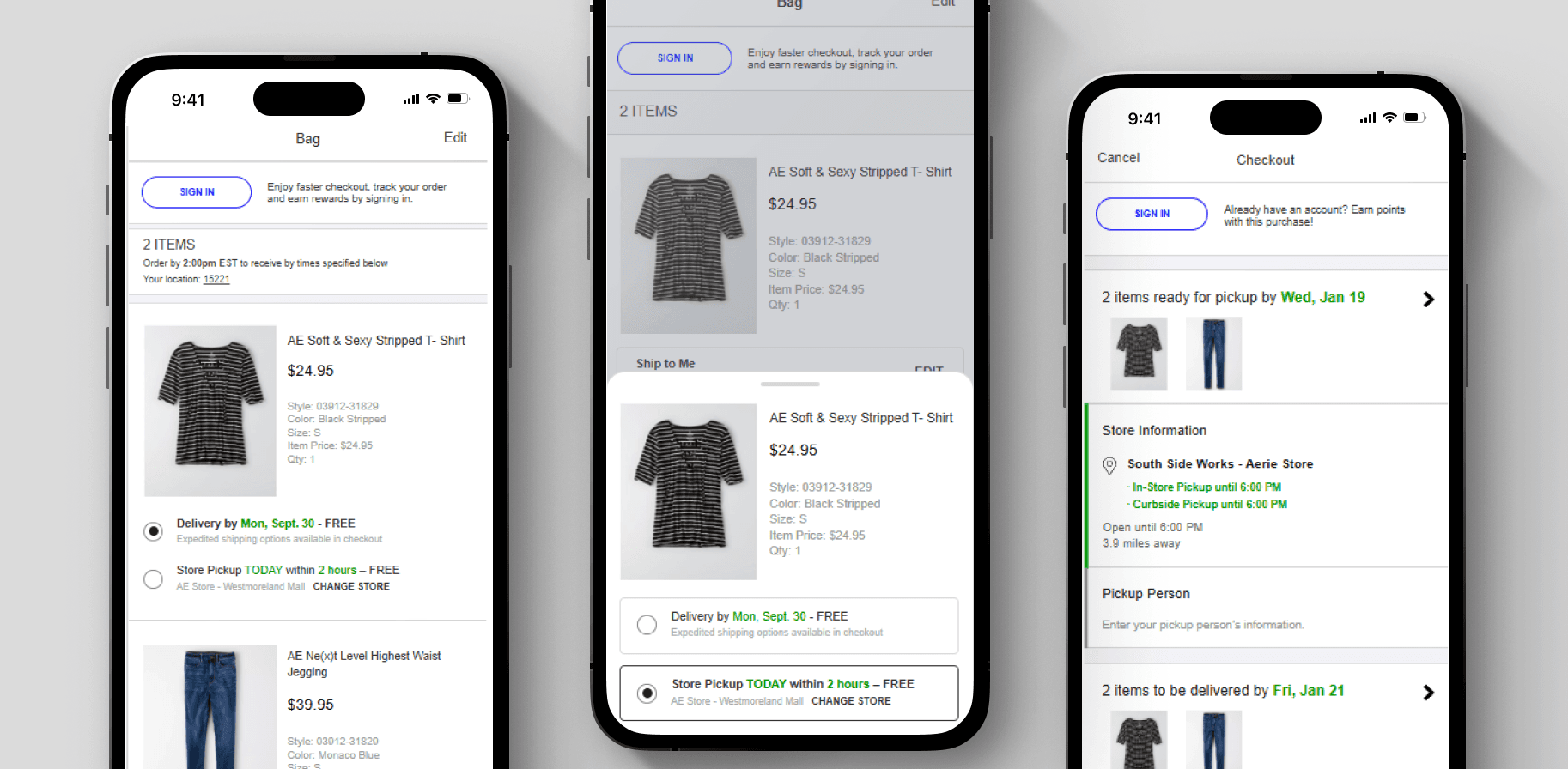
We landed on a model where customers could choose, per item, whether to ship to home or pick up in store, all within the cart to checkout flow. The split order would be presented clearly at checkout, showing two fulfillment groups with separate timing.
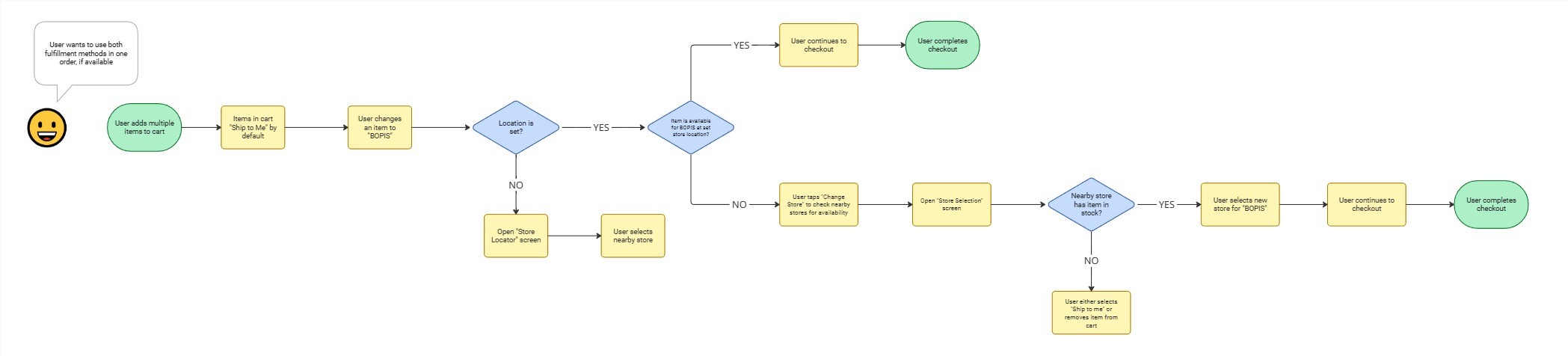
As the lead app designer, I went through several iterations of designs, reading from best-in-class competitor analysis and existing data insights. After going over each iteration with stakeholders, I built clickthrough prototypes for both iOS and Android. The designs kept the fidelity at concept-level, which was enough to communicate the mechanic and simulate a real cart task without requiring a full UI build.
Writing a script, I ran unmoderated remote testing sessions. Participants were given tasks simulating a real order where different items had different fulfillment availability. This qualitative data was fed back into the wireframes, updating the designs as needed based on user feedback.